
Eyelid surgery, also known as blepharoplasty, is a procedure designed to refresh the appearance of the eyes by removing excess skin, muscle, and fat from the upper and/or lower eyelids. This treatment can help patients in Salt Lake City, Utah look more rested and alert while addressing heaviness or puffiness around the eyes.
Eyelid surgery may help improve:
Blepharoplasty can be performed on its own or combined with other facial procedures such as a facelift or brow lift. During your consultation, Dr. Vincent will help determine the best approach for your goals.
Who is a good candidate for
A good candidate for eyelid surgery is someone experiencing drooping upper lids, under-eye bags, or impaired vision due to excess skin.
Ideal candidates want a brighter, more rested appearance around the eyes.

A good candidate for eyelid surgery is someone experiencing drooping upper lids, under-eye bags, or impaired vision due to excess skin.
Ideal candidates want a brighter, more rested appearance around the eyes.
1–2 hours
3–7 days
3–6 weeks
Eyelid Surgery (Blepharoplasty)
1–2 hours
3–7 days
3–6 weeks
WORLD-CLASS OUTCOMES
Seeing is believing! Take a look at some of Vincent Surgical Arts’ amazing work to see what he can do for you. These are real images of real patients whose lives have been enhanced by Dr. Vincent and team.


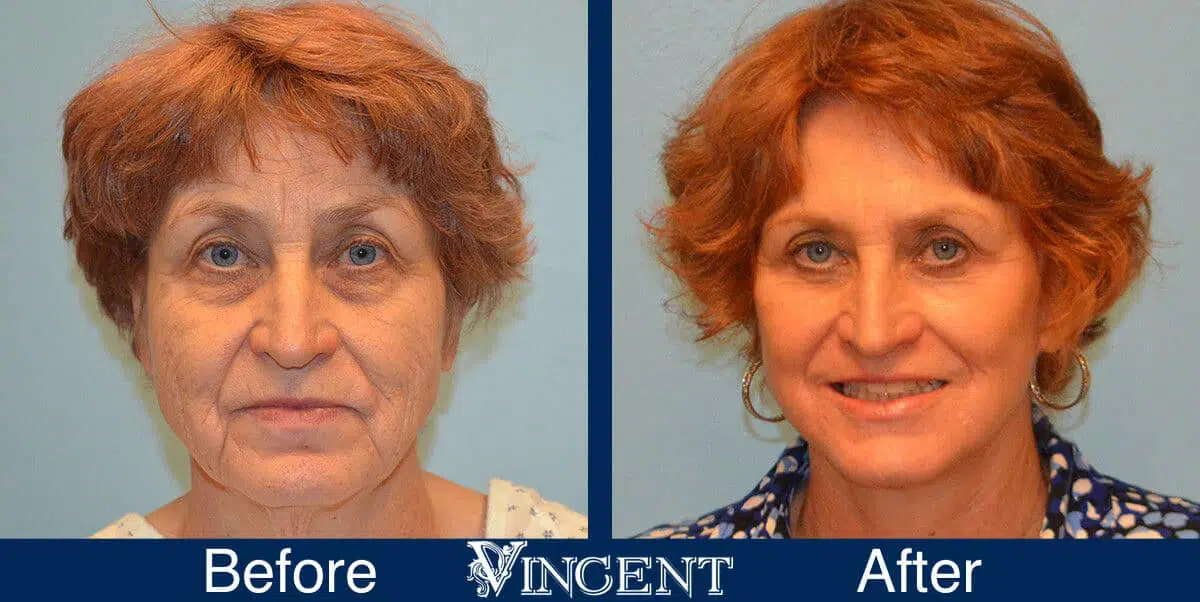
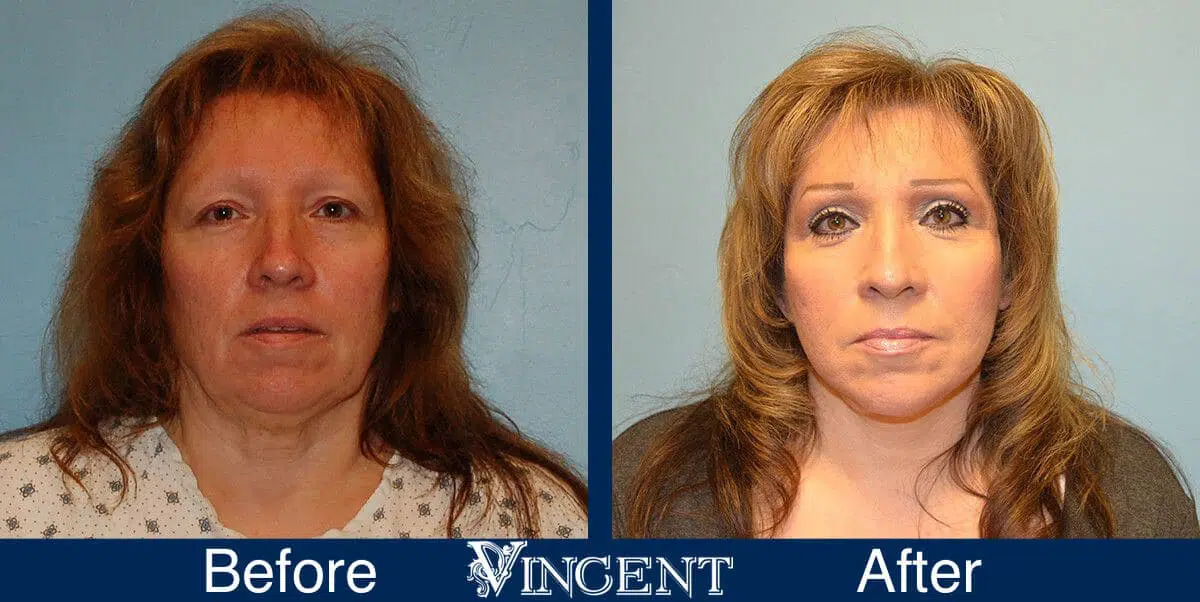
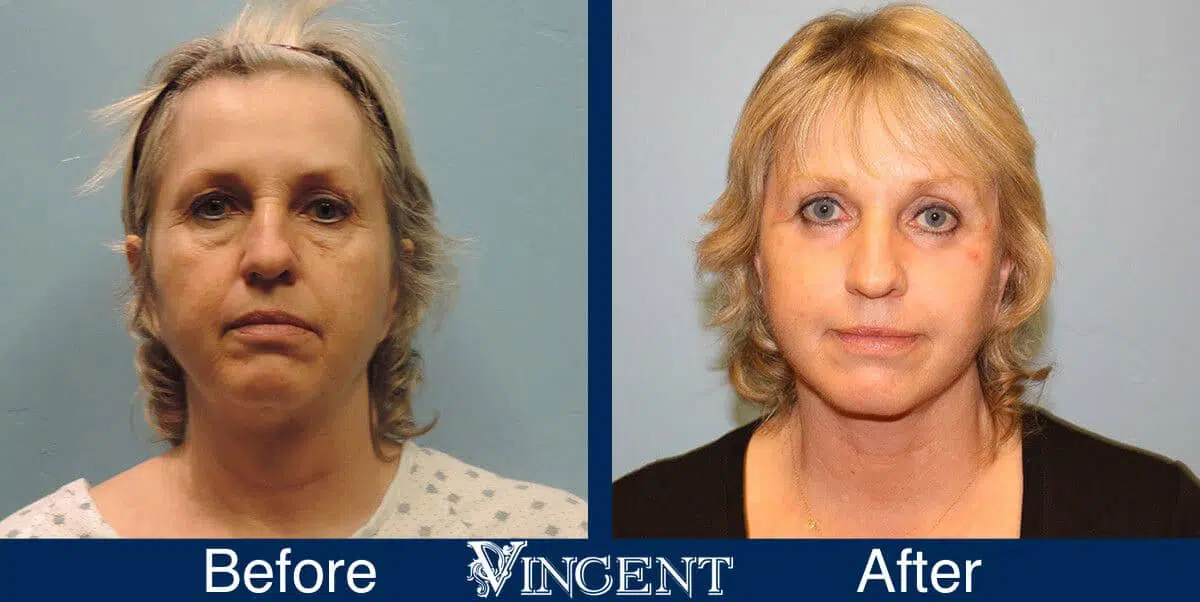
The initial consultation with your surgeon or his personal and thoroughly trained Surgery Consultant is very important. They will need your complete medical history, so check your own records ahead of time and be ready to provide this information. You will also be required to have a recent eye exam and have the results sent to our office prior to the surgery.
You and your surgeon should carefully discuss your goals and expectations for your eyelid surgery. You’ll need to discuss whether to do all four eyelids or just the upper or lower ones, whether skin as well as fat will be removed, and whether any additional procedures are appropriate.
Your cosmetic surgeon or his Surgery Consultant will explain the techniques and anesthesia that will be used during the procedure and the risks and costs involved. Don’t hesitate to ask us any questions you may have, especially those regarding your expectations and concerns about the results.
You will be given specific instructions on how to prepare for your eyelid surgery, including guidelines on eating and drinking, smoking, and taking or avoiding certain vitamins and medications. Carefully following these instructions will help your surgery go more smoothly.
While you’re making preparations, be sure to arrange for someone to drive you home after your surgery, and to help you out for a few days if needed.
The cost of eyelid surgery varies by patient. Please schedule an eyelid surgery consultation so that we may answer this and any other question you may have. If financing is something that you would like to consider. We have developed relationships with Key Bank, Zions Bank, and Care Credit to help you realize your blepharoplasty goals in an affordable and flexible way that best serves you.
Most insurance policies don’t cover eyelid surgery unless you can prove that drooping upper lids interfere with your vision. Check with your insurer.
Blepharoplasty usually takes less than one hour depending on the extent of the surgery.
Eyelid surgery will be performed at our surgery center. It’s usually done on an outpatient basis; rarely does it require an inpatient stay.
Eyelid surgery is usually performed under local anesthesia, which numbs the area around your eyes, along with general or intravenous sedatives.
In a typical procedure, the surgeon makes incisions following the natural lines of your eyelids; in the creases of your upper lids, and just below the lashes in the lower eyelids. The incisions may extend into the crow’s feet or laugh lines at the outer corners of your eyes. Working through these incisions, the surgeon separates the skin from underlying fatty tissue and muscle, removes excess fat, and often trims sagging skin and muscle. The incisions are then closed with very fine sutures.
If you have a pocket of fat beneath your lower eyelids but don’t need to have any skin removed, your surgeon may perform a transconjunctival blepharoplasty. In this procedure the incision is made inside your lower eyelid, leaving no visible scar. It is usually performed on younger patients with thicker, more elastic skin.
You will need you to keep your head elevated for several days and to use cold compresses to reduce swelling and bruising. (Bruising varies from person to person: it reaches its peak during the first week, and generally lasts anywhere from two weeks to a month.) You’ll be shown how to clean your eyes, which may be gummy for a week or so. We may recommend eye drops since your eyelids may feel dry at first and your eyes may burn or itch. For the first few weeks, you may also experience excessive tearing, sensitivity to light, and temporary changes in your eyesight, such as blurring or double vision.
Your cosmetic surgeon will follow your progress very closely for the first week or two. The stitches will be removed four days to a week after surgery. Once they’re out, the swelling and discoloration around your eyes will gradually subside, and you’ll start to look and feel much better.
You should be able to read or watch television after two or three days. However, you won’t be able to wear contact lenses for about four weeks, and even then they may feel uncomfortable for a while.
Most people feel ready to go out in public (and back to work) in a week to ten days. By then, depending on your rate of healing and your surgeon’s instructions, you’ll probably be able to wear makeup to hide the bruising that remains. You may be sensitive to sunlight, wind, and other irritants for several weeks, so you should wear sunglasses and a special sunblock made for eyelids when you go out.
You will need to keep your activities to a minimum for three to five days and to avoid more strenuous activities for about three weeks. It’s especially important to avoid activities that raise your blood pressure, including bending, lifting, and rigorous sports. You may also be told to avoid alcohol and salt since it causes fluid retention.
Complications are infrequent and usually minor. Nevertheless, there is always a possibility of complications, including infection or a reaction to the anesthesia. You can reduce your risks by closely following the instructions we give you both before and after surgery.
The minor complications that occasionally follow blepharoplasty include double or blurred vision for a few days; temporary swelling at the corner of the eyelids; and a slight asymmetry in healing or scarring. Tiny whiteheads may appear after your stitches are taken out; they can remove them easily with a very fine needle.
Following eyelid surgery, some patients may have difficulty closing their eyes when they sleep; in rare cases, this condition may be permanent. Another very rare complication is ectropion, a pulling down of the lower eyelids. In this case, further surgery may be required.
Eyelid surgery patients have also considered rhinoplasty, facelift, brow lift, as well as our chin, cheek, and lip procedures.
Read below to understand the overall process.
At Vincent Surgical Arts, several plastic and reconstructive surgeons offer face lift surgery. The most common technique used involves an SMAS face lift (a submuscular aponeurotic system face lift). This tightens up the underlying muscular layer as well as the skin, providing an increase in tone that is longer lasting.
At Vincent Surgical Arts, several plastic and reconstructive surgeons offer face lift surgery. The most common technique used involves an SMAS face lift (a submuscular aponeurotic system face lift). This tightens up the underlying muscular layer as well as the skin, providing an increase in tone that is longer lasting.
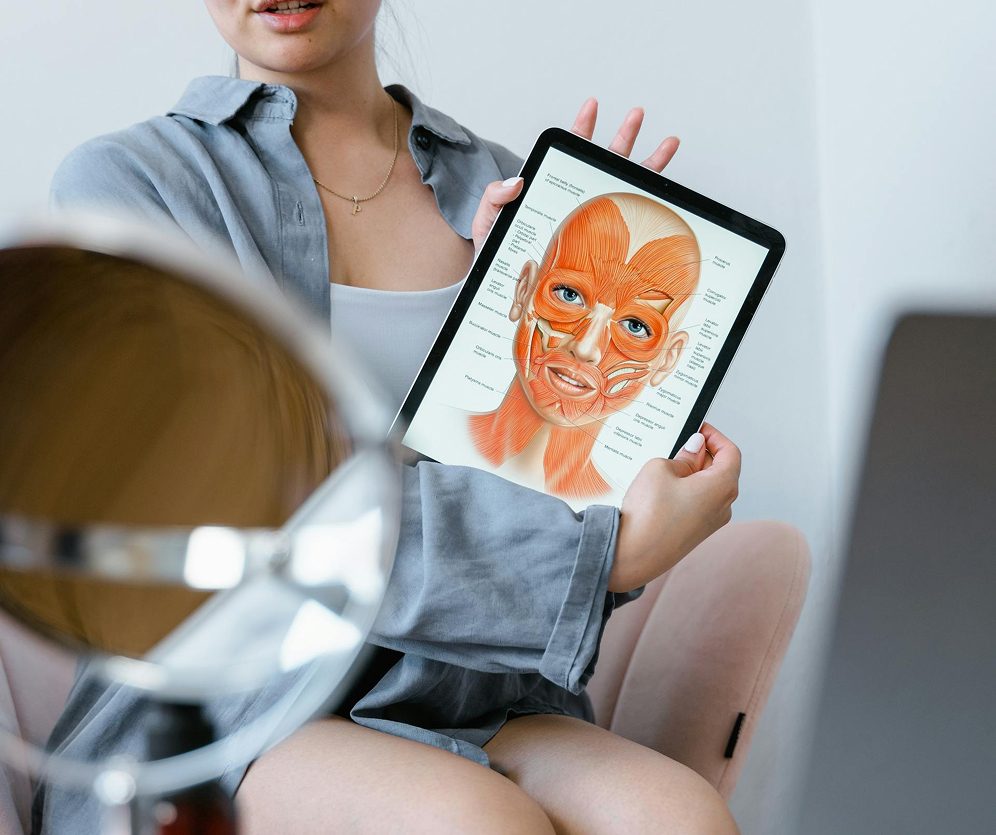
Surrounded by the latest treatments and advice, you’ll have everything you need to get back to your best health. Our patient rooms are designed for your comfort, while our catering team, in collaboration with expert dietitians, provide healthy, delicious meals to support your recovery.
Exceptional patient care is a way of life for us. Our teams will be with you every step of the way, tailoring your care to your specific needs and giving you the peace-of-mind that comes with knowing you’re in the best hands.
We work together as one to guide you through every step of your patient experience. From explaining your personal treatment plan to ensuring all details are taken care of, we make the process stress-free, so you can focus on your health.
Seeing is believing! Take a look at some of Vincent Surgical Arts’ amazing work to see what he can do for you. These are real images of real patients whose lives have been enhanced by Dr. Vincent and team.
Call us directly, submit a sample or email us!
6710 Blackstone Rd #201
Cottonwood Heights, UT 84141
Call us :(801) 942-1111
Mon-Sat: 7:30am - 7:00pm
Sun: 8:00am - 6:00pm